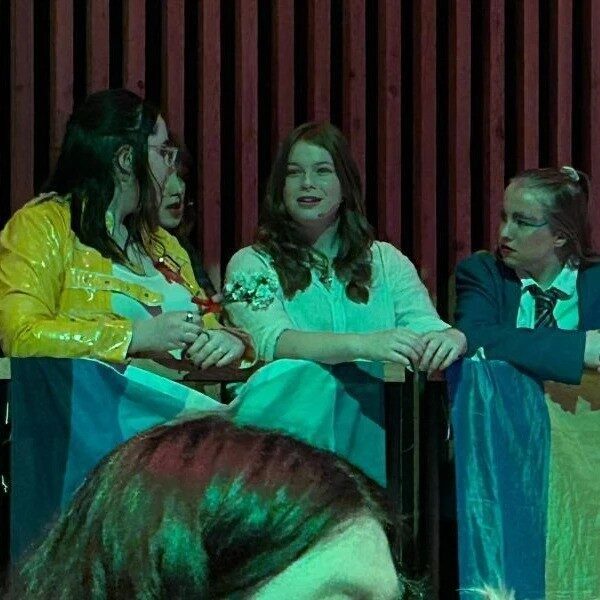
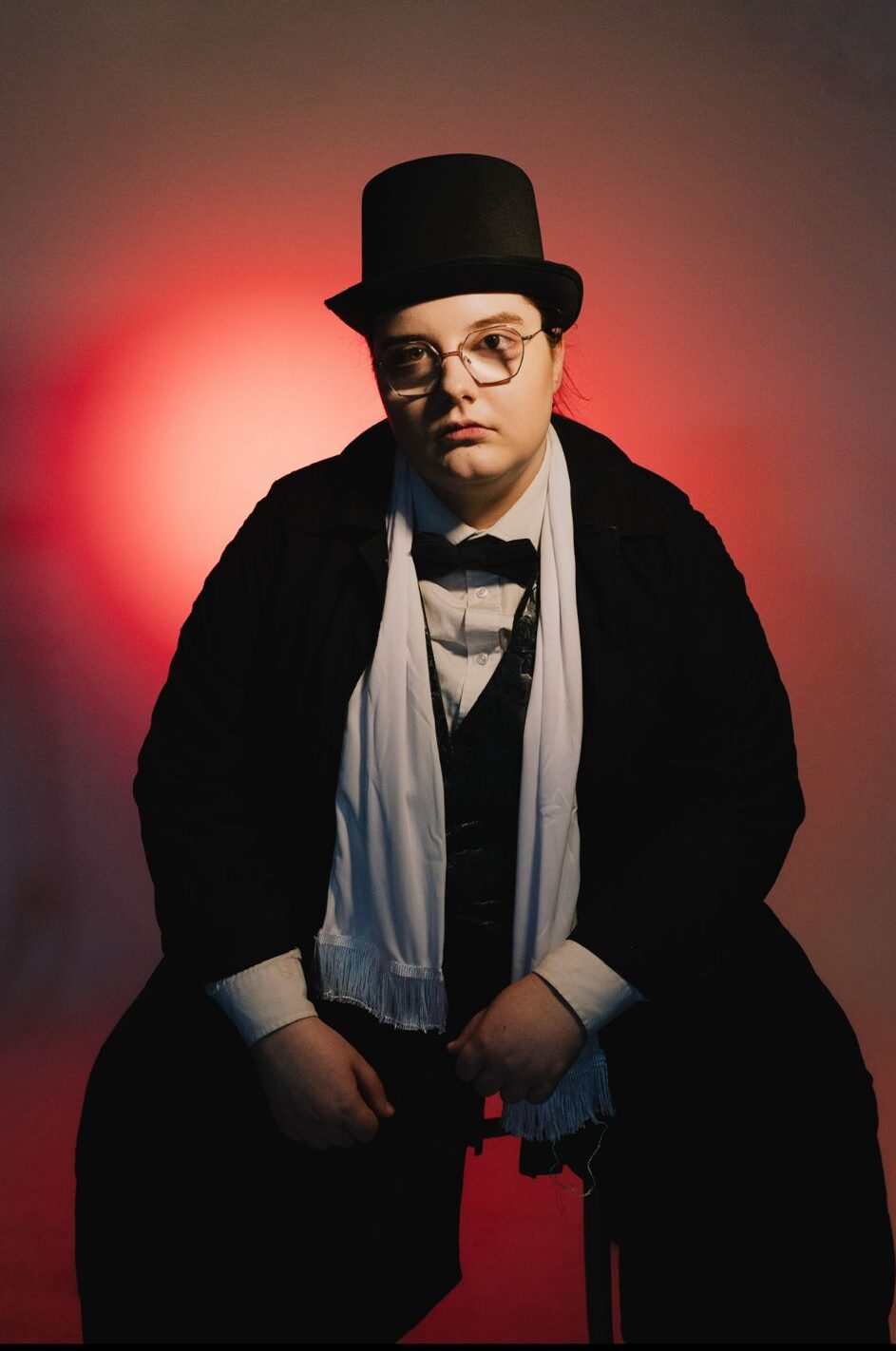
This show was a massive challenge for me in terms of acting a real villain. Previously I have played melodramatic, likeable villains – this time, I had to portray a cold, unlikeable, misogynistic man. I worked a lot with Stanislavski’s techniques to create a naturalistic character and worked to infuse my performance with lots of vulnerable anger.
My main barrier was my worry of physically or emotionally hurting my castmates when playing this character. Once I got over this hurdle through rehearsal and tightly choreographing sequences, I was able to portray Edward as more of an evil man.
It was a fine balance between playing a villain with a tragic, and very queer, past. His backstory ‘justifies’ the way he acts, but we wanted him to be unlikeable and irredeemable to the audience. This meant I had to play even further into the control and power Edward has over the other girls.
THE STRANGE EXCHANGE
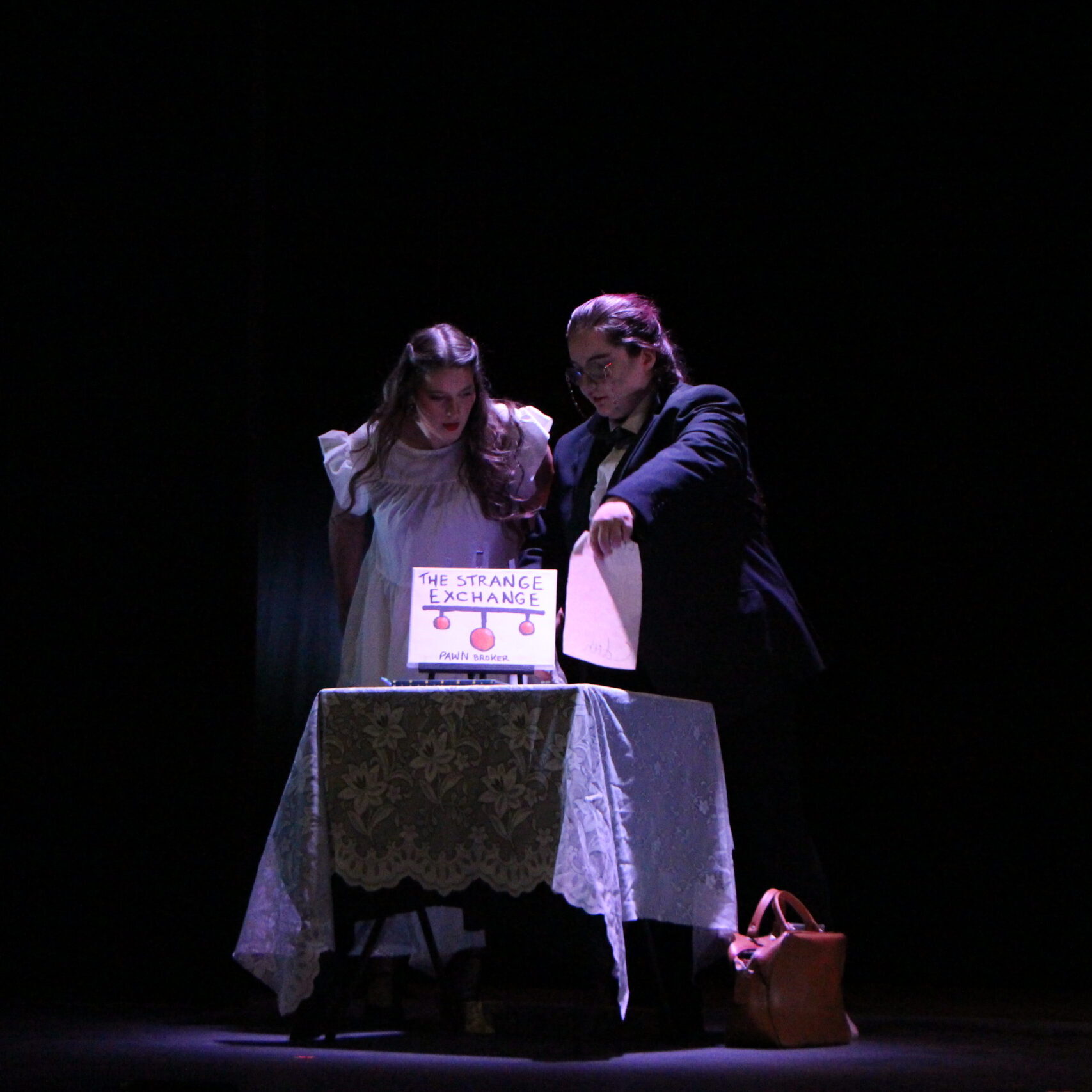
The final act in my trilogy of LGBTQ+ driven performances at university concluded in this original work by Shadows of Pride, our student Takeover company. Set in 1926 SoHo, London, this show follows two forbidden lovers, Doris and Daphne, who find themselves trapped working for Edward, ringleader of The Strange Exchange, a popular nightclub.
In this show, I played Edward Swan, the tragic antagonist who is a closeted gay man during a time when homosexuality was illegal. His actions are driven by his past experiences fighting in the first world war, where he had lied about his age in order to enlist, and faced horrors he was not expecting.
Primarily I was in charge of costume design. The 1920s isn’t just about flapper dresses and big feather fans, I needed to find dresses with the right silouettes that flattered our cast members; a feat that was quite difficult with how modern garments are constructed, so we compromised and prioritised comfort over accuracy.
I was also AMD, and composed all of the underscoring and backing tracks for the songs. I was inspired by jazz standards and the charleston rhythms, as well as basing my underscores on composers that have inspired me, such as Yu-Peng Chen, Debussy, and Howard Shore.
ROCKY HORROR SHOW
I had the honour of playing Frank’N’Furter in York St John’s student led production of Rocky Horror Show, 2025. This show is very close to my heart as a transgender performer, and this was my debut lead role in a musical.
In this production, I hand sewed a majority of my own costumes – the scrubs you see here I adjusted to make them more accurate to the film version of the costume. In the film, Frank wears an upside-down triangle, representing the number of queers killed during Nazi Germany’s holocaust on Jewish and other individuals during World War 2. The safety pin is a modern symbol, often worn in alternative communities, representing a person is safe to numerous minorities, including the LGBTQ+ community, muslims, survivors of abuse, and many others. I added these elements as I am very passionate about LGBTQ+ rights and history.
I was also Assistant Director for this production, and did a bulk of the background research to aid with characterisation. This included the context in which Rocky Horror Show was written, following the Stonewall Riots in New York in 1969.
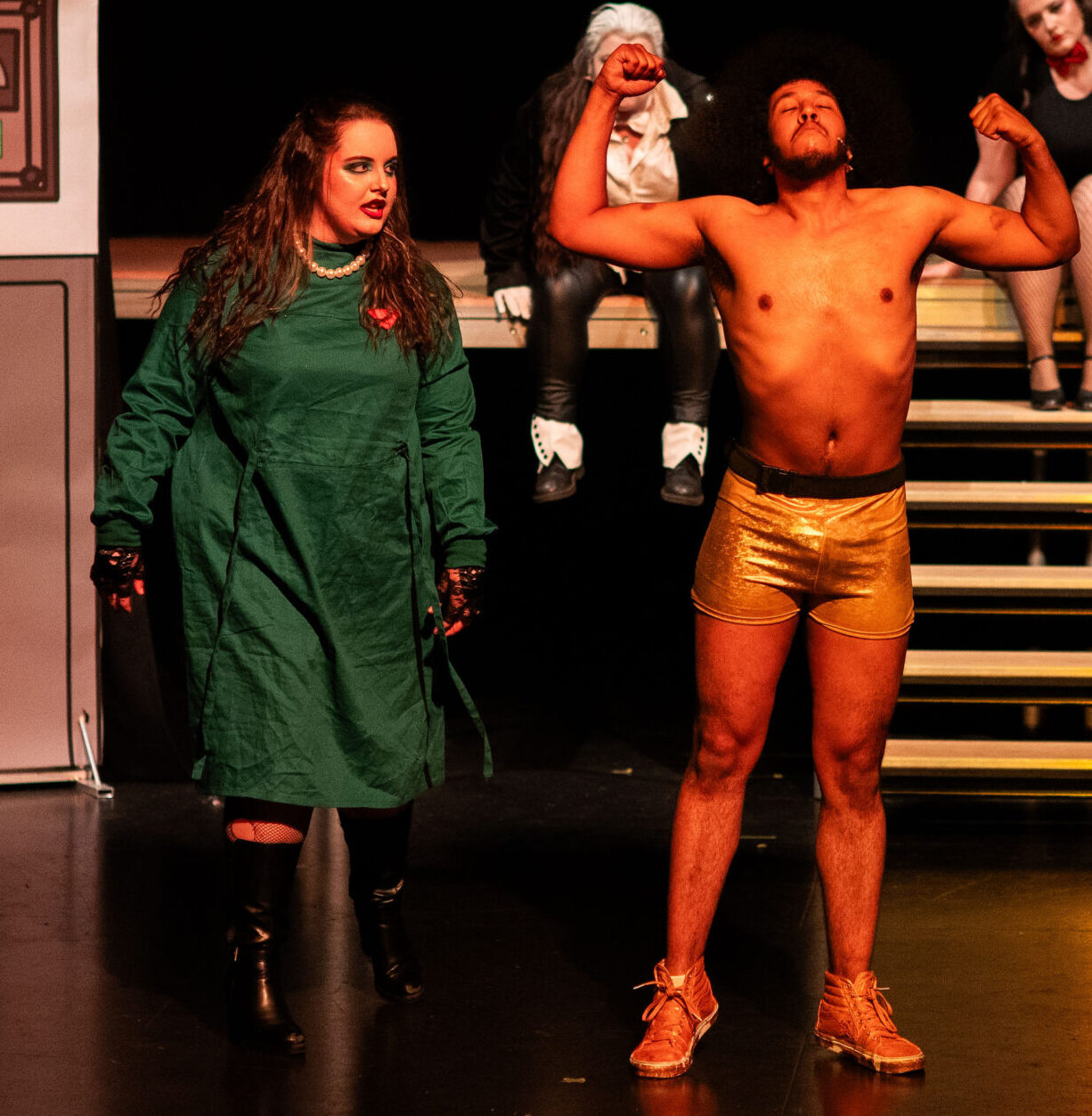
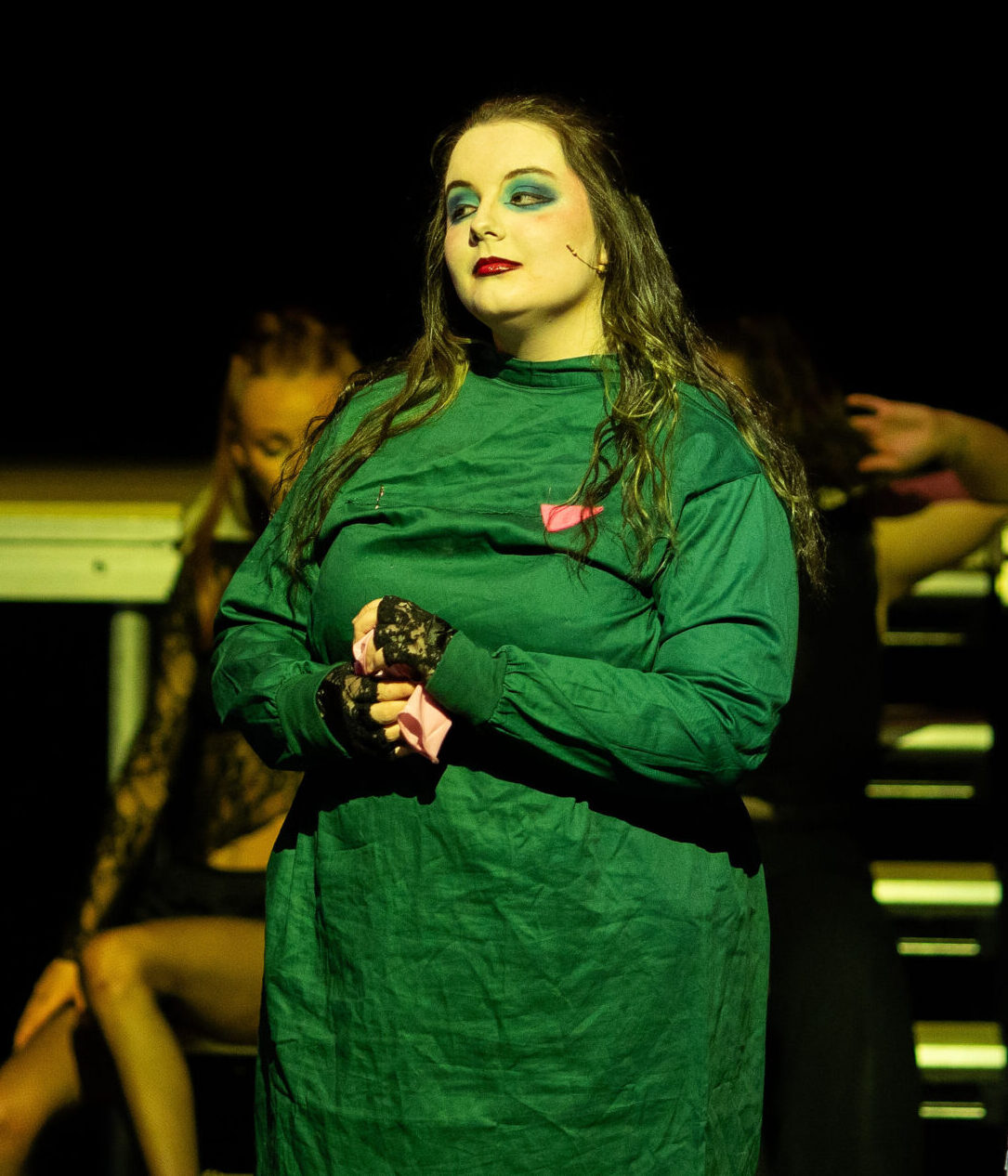
Rocky Horror Show developed me as a singer and a performer. I began to expand my lower range more and developed into a tenor. This was a major milestone in my transition as a transgender performer. My voice is beginning to match the person I feel like inside. While I worked on this show, I solidified my skills in chest voice and belting, skills I did not have when I initially started university.
Alongside this, Frank’n’Furter helped develop my confidence in my own body. I did not like showing skin before this, but becoming Frank and wearing his costumes brought out a new side of me.
This influenced my acting choices too, and I used the camp, mystical performance of Tim Curry and the energetic flamboyance of Freddie Mercury to inspire how I played Frank’n’Furter.
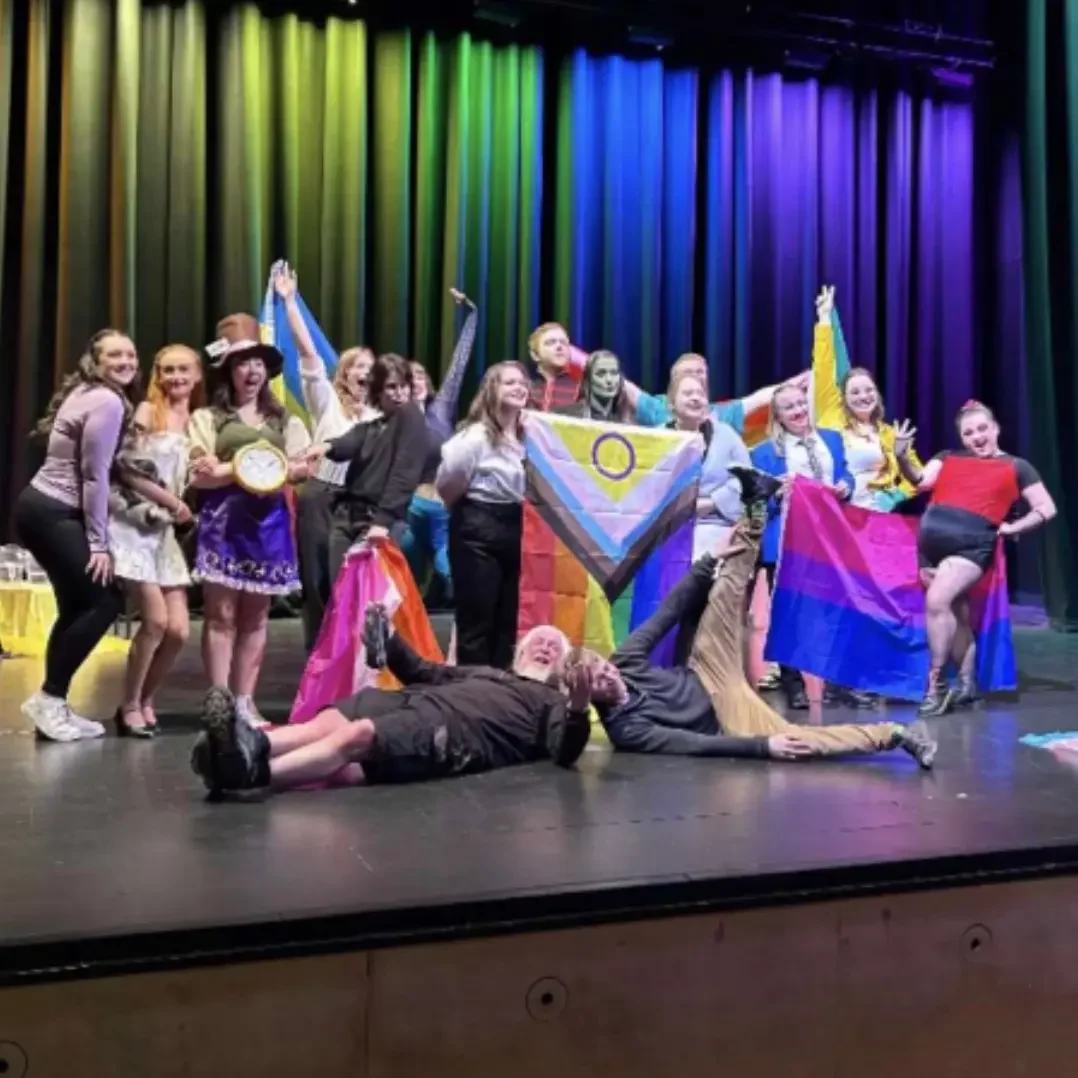
This was my first time playing a lead role onstage, and it gave me chance to develop into the actor I had always wanted to be. I worked more on my reactions here, on what I would be doing when the focus wasn’t on me.
This show was an opportunity for me to boost my confidence after having a severe knock in college. It helped me realise I could sing and act, and I also began to learn dance essential to musical theatre.
?CABARET?
This project was a group collaboration with the musical theatre first years, in which we presented material we wished to perform in a show very personal to our own lives. We explored identityand self-worth, plus what being in a cabaret actually means. All the world is a stage.
Through my exploration of identity, I chose to play Freddie Mercury: openly queer, a fan of melodrama, and a man who’s story inspires me every day to push through adversity and strife.
I performed Lose It All by Sam Tompkins, a song which represented Freddie’s battle with AIDS and the scrutiny he recieved for his sexuality in life.
Considering this show featured a lot of LGBTQ+ representation from cast members both straight and gay, I served as the consultant for queer history and sensitivity screening for our script and our storyline.