TakeOver Production Management
During the 2026 TakeOver festival I had the opportunity to become a theatre technician and I played several roles.
- I assisted with rigging LX for Die Fledermaus;
- Operated the fly floors during initial rigging for TakeOver;
- Operated LX for two shows;
- Operated sound for one show;
- Learned general safety rules for working production management.
LX Operator
I was involved in almost every area of working LX in the theatre.
Rigging
I assisted during rigging for Die Fledermaus once TakeOver had concluded. During this process I was taught:
- How to read and understand a light plan;
- How to convert a light plan into actual lamp rigging;
- How to recognise each type of lamp (including source 4s, parcams, fresnels, and other lamps);
- How to safely and correctly attach a lamp to an LX bar;
- How to insert gels and goboes;
- How to prepare lamps for focussing (opening shutters and ensuring cables have enough slack);
- General safety when working onstage during rigging.
Show Lighting
I was present for three light plotting sessions, and although I was not allowed to plot the shows myself due to time constraints, I was able to observe what was happening and I feel confident that I understand how a DMX controller works and how it translates into QLab. By the end of the week I was able to quickly find cues by using the ‘go to cue’ button and entering the number for the correct cue.
I was the LX operator for two shows this week: Cabin Fever and Deflowered.
Deeply Deceitful’s Cabin Fever
This show was very technically hands on. There was a flicker effect for scene transitions I had to operate myself, alongside a tricky cue transition into and out of a trip scene. I had a lot of fun with this show due to how technically hands on it was, and had a good time lighting it overall.
Deflowered’s Deflowered
I was very excited to light this show as it was a very powerful piece of verbatim theatre about the red light district. This show had less light cues with more simple sequences, but the challenge came in the form of: this show was partially improvised. This meant I had less strict cue lines and had to pay attention specifically to the actions and body language of the actors in order to go to the next cue.
Flies Operator
During pre-show rigging for TakeOver, I was up in the fly floor, learning to operate the flies.
I was taught:
- How to use the many systems at York Theatre Royal, including:
- the double-purchase counterweight system;
- hemp lines;
- electronic truss systems.
- How to load the fly cradles safely, plus cradle heavy vs. bar heavy;
- How to create ‘deads’;
- How to ensure lines and bars were safe;
- How to safely raise and lower bars;
- Correct and clear call-outs to the stage floor so people knew what bars were moving and which ones were safe;
- How heavy each weight was, and how much weight each bar would need (full blacks vs half tabs vs sliders vs LX bars)
- Safety precautions; eg. what to do if a weight falls, proper communication, proper labelling of lines for cradle or bar heavy, and preventing injury.
Shadows of Pride: Production Roles
I was the assistant musical director (see my compositions tab for more on this), but I also was the costume lead.
Costume Lead
Much of my work here involved researching the types of clothing worn in the 1920s and how we could create that atmosphere with our costuming, in a way that was comfortable and flattering for each performer. Initially our performance was more inspired by ‘Cabaret’ and ‘Moulin Rouge’, so our costume plan was initially very different, detailing the types of underwear worn by women in the 1920s.
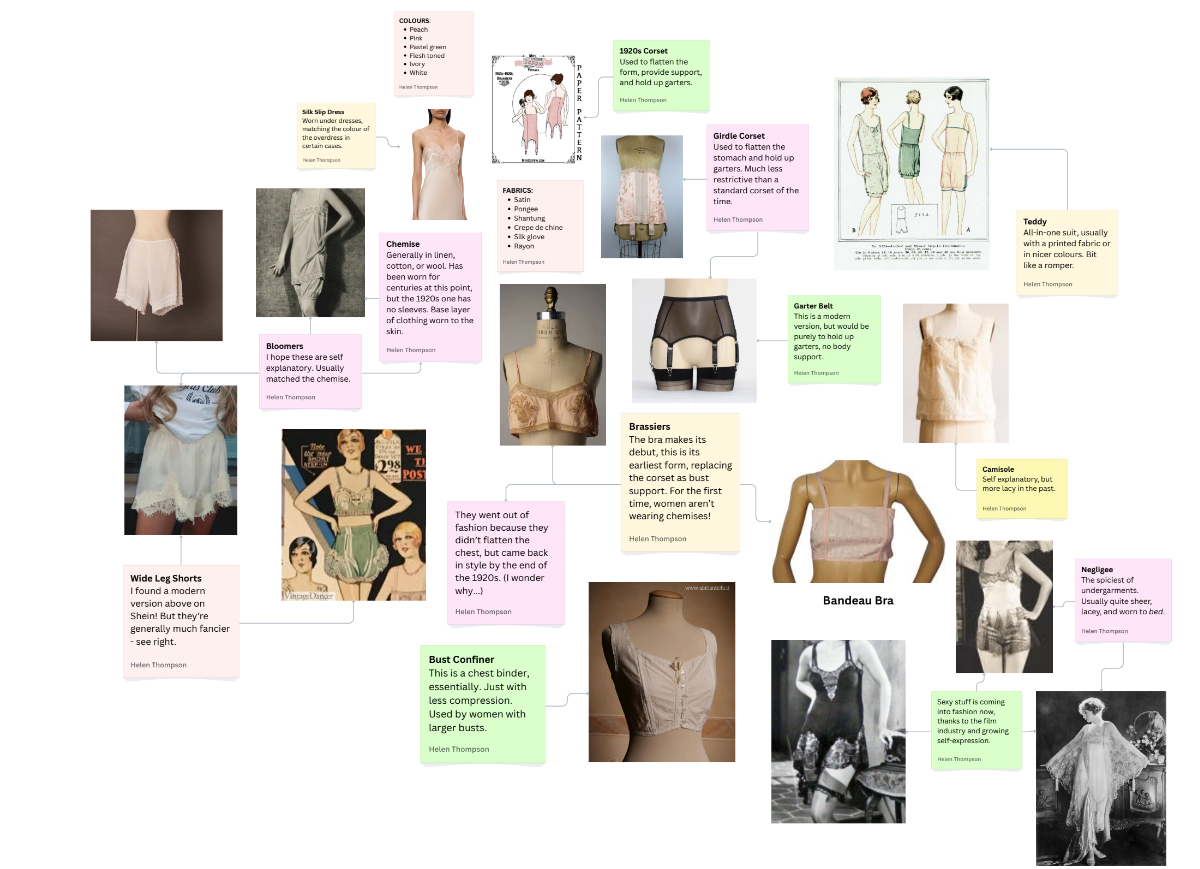
This image contains my initial research into the underwear of the 1920s, its function, and how it developed and changed throughout the era.
Like many kinds of women’s fashion at this time, fashion was evolving rapidly, and we are seeing women drift away from corsets and begin to wear garments that flattened her chest and made her figure look more boxy and straight.
Contrary to popular belief, women were not oppressed by corsets back in the 1920s, just as women today are not oppressed by bras. They were a foundational garment made to provide support to the breasts, helped with posture, and reduced pain and discomfort when worn correctly.
The shift away from corsets occurred because women were entering the workforce more after WW1 and wanted more movement to perform manual labour, as well as having their own form of self-expression.
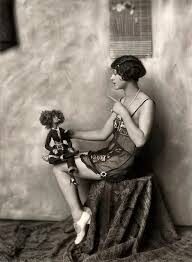
Once we had more established a show, I made a list of exactly what costumes we would need, and sent the adjacent photo to the actors playing the showgirls to give them an idea of the costumes I was looking for in terms of silhouette and style.
Finding costumes proved to be difficult, and I ended up prioritising the comfort of the actors over historical accuracy.